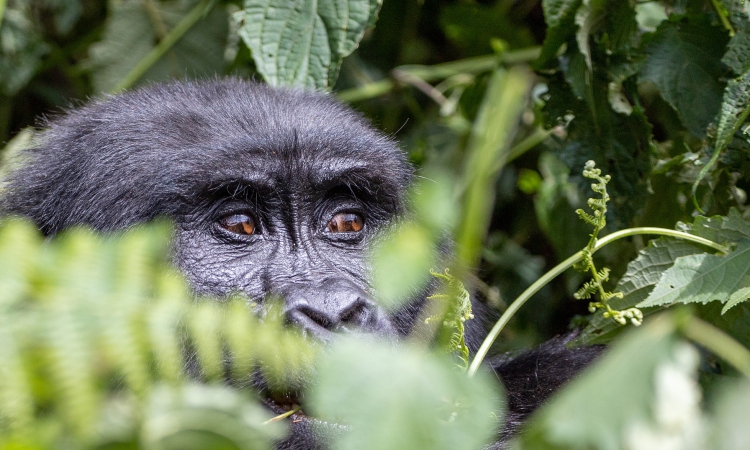

Mountain Gorilla Habitat – Mountain gorillas are found in three countries in Africa: the Democratic Republic of Congo, Uganda, and Rwanda.
Unfortunately, their habitat is disappearing at an alarming rate due to deforestation caused by human activities like agriculture and mining, as well as human encroachment.
The Gorilla Organization is working hard to plant more trees and create a natural barrier between humans and gorillas.
Today, the remaining gorilla populations are mostly isolated and protected in national parks in these three countries, as explained below.
Virunga National Park in the Democratic Republic of Congo

Virunga National Park is Africa’s oldest national park, established in 1925.
It is located on the border between Uganda and Rwanda, stretching across an area of more than 8,000 km², from north to south for about 300 km (190 miles).
The park is home to the active volcanoes of Mount Nyiragongo and Mount Nyamuragira, which significantly impact the park’s habitat and wildlife.
It is home to over 3,000 species of plants and animals, with over 300 of them endemic to the Virunga Rift Valley, including the endangered Eastern gorillas.
The park has been recognized as a UNESCO World Heritage site due to its diverse habitats and its conservation of the endangered mountain gorilla habitat.
Wars and political instability have often prevented the world from visiting the Democratic Republic of Congo, yet it has Africa’s best tourism potential.
The only country where you can see all three gorilla subspecies is the Democratic Republic of Congo.
Mountain gorillas are found in Virunga National Park, but due to insecurity in the eastern part of the country, gorilla viewing is currently only possible in Virunga National Park.
The gorilla permit in the Democratic Republic of Congo costs $400.
Bwindi Impenetrable National Park, Uganda

In the southwestern part of Uganda lies Bwindi Impenetrable National Park, which is part of Bwindi Impenetrable Forest.
It is situated along the border of the Democratic Republic of Congo and is located next to Virunga National Park, on the Albertine Rift.
The national park covers an area of 320 km² and comprises both mountain and lowland forests.
Bwindi National Park is home to over 120 species of mammals and over 300 species of birds.
It is also home to half of the world’s remaining mountain gorillas, with about 500 mountain gorillas living there.
The rest of the mountain gorillas are spread across three national parks in the Democratic Republic of Congo, Uganda, and Rwanda.
Bwindi Impenetrable National Park has 17 habituated gorilla groups, and mountain gorillas in Bwindi prefer lower altitudes.
The cost of gorilla permits in Uganda is $700, making it an ideal destination for budget gorilla trekkers.
Mgahinga Gorilla National Park, Uganda
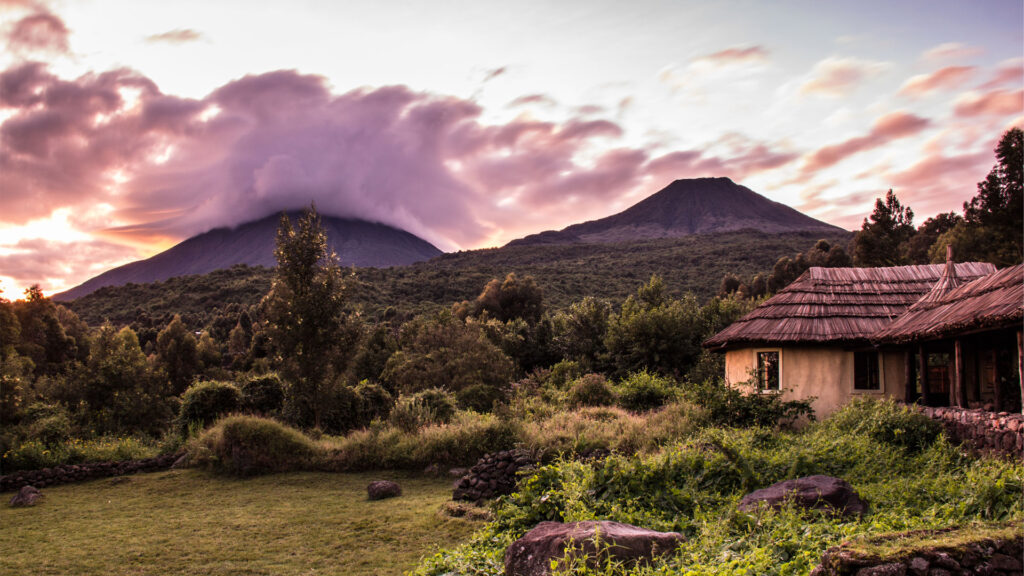
Established in 1991, Mgahinga Gorilla National Park is nestled in the heart of the Virunga mountains.
It was once a game reserve and is home to three inactive volcanoes: Mount Muhabura, Mount Gahinga, and Mount Sabyinyo.
The park is home to more than 75 mammals, including mountain gorillas. Mgahinga National Park has only one habituated gorilla group, and mountain gorillas in Mgahinga live at relatively high altitudes.
The cost of gorilla permits in Uganda is $700, making it an ideal destination for budget gorilla trekkers.
Volcanoes National Park, Rwanda

Situated in the northwestern part of Rwanda, Volcanoes National Park covers an area of 160 km².
The park is made up of five of the eight volcanoes of the Virunga mountain range, including Karisimbi, Bisoke, Muhabura, Gahinga, and Sabyinyo. Volcanoes National Park borders Virunga National Park and Mgahinga Gorilla National Park.
All the mountain gorillas in Rwanda are found in Volcanoes National Park. During the 1960s, the renowned primatologist Dian Fossey established a base in the park to observe the behavior of these magnificent creatures.
Trekking gorillas in Volcanoes National Park is very popular and brings thousands of tourists to the country annually.
There are currently ten habituated mountain gorilla groups in Rwanda.
The country is considered the most convenient place in the world to see mountain gorillas due to its well-developed tourism infrastructure and professional staff and services.
Rwanda issues the most expensive gorilla permits, each costing USD 1500 per person per trek, but the chances of seeing gorillas in Rwanda are over 99%.
In conclusion, the mountain gorilla’s habitat is a precious and fragile resource that requires our protection and conservation efforts.
Virunga National Park, Bwindi Impenetrable National Park, Mgahinga National Park, and Volcanoes National Park are the last strongholds of these magnificent creatures.
By supporting responsible tourism and conservation initiatives, we can help safeguard the future of mountain gorillas and the ecosystems they inhabit.
Let us cherish and protect these incredible animals and their habitats, ensuring that future generations can continue to marvel at their majesty and beauty.