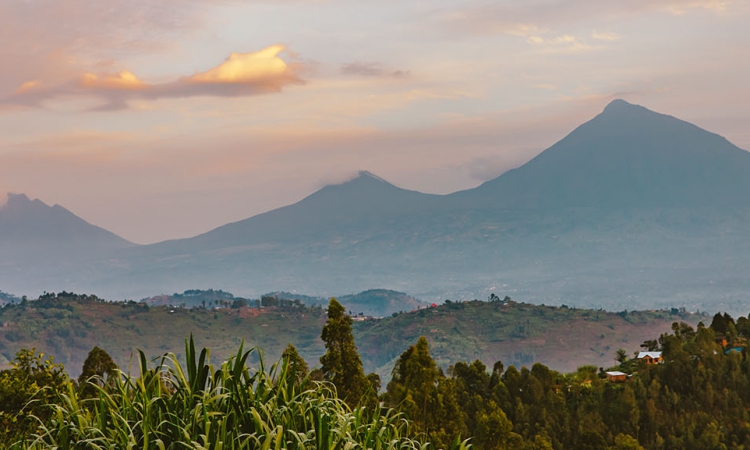
The Virunga Mountains are a chain of eight volcanoes spanning the borders of Rwanda, Uganda, and the Democratic Republic of Congo. They form part of the Great Rift Valley and sit within the Virunga Conservation Area, shared by all three countries.
The 8 Volcanoes of the Virunga Range
The eight volcanoes are Mount Nyiragongo (3,470 m), Mount Nyamuragira (3,057 m), Mount Bisoke (3,711 m), Mount Muhabura (4,127 m), Mount Gahinga (3,474 m), Mount Sabyinyo (3,634 m), Mount Mikeno (4,437 m), and Mount Karisimbi (4,507 m), the tallest of the range.
Two of the eight volcanoes are active: Nyiragongo and Nyamuragira, both in the DRC. One volcano is dormant, and the rest are extinct.
Uganda is home to three of the eight volcanoes: Muhabura, Gahinga, and Sabyinyo, all located in the southwest of the country along the shared border with Rwanda and the DRC.

Local communities named these volcanoes “Mufumbiro,” meaning “mountains that cook,” a reference to their volcanic activity and past eruptions.
Mount Muhabura
Mount Muhabura, sometimes spelled Muhavura, is the highest of Uganda’s three Virunga volcanoes at 4,127 m and is extinct.
The climb takes about eight hours round trip. From the summit, hikers can see the other Virunga volcanoes, Lake George, Lake Edward, Queen Elizabeth National Park, and the snow-capped Rwenzori Mountains.

Mount Sabyinyo
Mount Sabyinyo sits within Mgahinga Gorilla National Park at an altitude of roughly 3,634 m. The name translates to “old man’s teeth,” a reference to its jagged, eroded peaks.
Climbing Sabyinyo is physically demanding and requires a good level of fitness.
The summit is unique in that hikers can stand at the point where Uganda, Rwanda, and the DRC meet, putting them in all three countries at once.
Mount Gahinga
Mount Gahinga is the smallest of the three Virunga volcanoes in Uganda, standing at about 3,474 m.
It sits inside Mgahinga Gorilla National Park, and many visitors climb it after a gorilla trek in the same park.
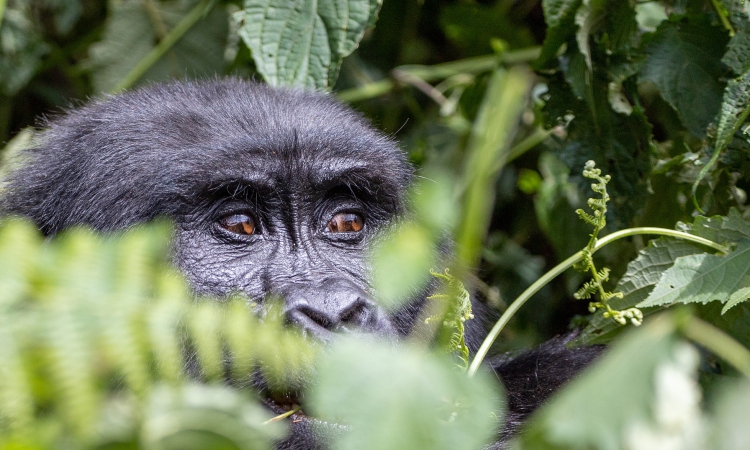
Combining mountain climbing with gorilla trekking and golden monkey tracking in Mgahinga Gorilla National Park lets visitors experience both primate encounters and volcano hiking on a single trip.
Mount Bisoke

Mount Bisoke, standing at 3,711 m, sits on the Rwanda side of the Virunga range and is known for the crater lake at its summit.
The hike to the summit and back typically takes four to six hours, making it one of the more accessible climbs in the range for visitors with limited time.
Mount Karisimbi
Mount Karisimbi, at 4,507 m, is the tallest of the eight Virunga volcanoes and one of the most demanding hikes in the range.
The climb usually takes two days, with an overnight stay partway up the mountain, and rewards hikers with views across the entire Virunga range on a clear day.
Mount Nyiragongo and Mount Nyamuragira
Nyiragongo and Nyamuragira, both located in the DRC, are the only two active volcanoes in the Virunga range.
Nyiragongo is known for holding the largest lava lake in the world within its crater, drawing hikers and researchers from around the world.
Nyamuragira, standing at 3,057 m, is one of Africa’s most active volcanoes and has erupted repeatedly over the past century.
Mount Mikeno
Mount Mikeno, at 4,437 m, is an extinct volcano located in the DRC and one of the more remote peaks in the Virunga range.
It is less frequently climbed than the other Virunga volcanoes, largely due to its more difficult access.
Which Virunga Volcano Should You Climb?
With eight volcanoes to choose from, picking the right one comes down to time available, fitness level, and which country your trip is based in.
For a short, half-day hike, Mount Bisoke in Rwanda is the most accessible option, with a manageable four to six hour round trip and a crater lake at the summit as a reward.
For a longer, more demanding climb, Mount Karisimbi offers the most complete Virunga experience, though it requires an overnight stay on the mountain and a genuinely difficult two-day trek.
Travelers based in Uganda often choose between Muhabura, Sabyinyo, and Gahinga, all three within Mgahinga Gorilla National Park. Gahinga is the easiest of the three, Muhabura offers the widest summit views, and Sabyinyo is the only climb that puts you in three countries at once.
For travelers interested in volcanology rather than gorilla trekking, Nyiragongo in the DRC stands apart from the rest of the range, since it is one of the few active volcanoes in the world with a viewable lava lake, though it requires separate logistics and permits from the Rwanda and Uganda volcanoes.
How Difficult Is It to Climb the Virunga Volcanoes?
Difficulty varies significantly across the range. Bisoke is considered one of the more manageable day hikes, while Karisimbi and Muhabura require a full day or more of sustained climbing.
Hikers should be in good physical condition for any of the Virunga peaks, since trails are steep, altitude increases quickly, and weather can change without warning.
A trekking permit is required to climb most of these volcanoes, and it is best arranged in advance through a licensed tour operator.
What to Pack for a Virunga Volcano Climb
Conditions can shift quickly at altitude on any of the Virunga volcanoes, so pack for both sun and rain regardless of season.
- Sturdy, waterproof hiking boots
- A warm layer for the summit, since temperatures drop significantly at higher elevations
- A rain jacket, even during the dry season
- Gardening gloves for gripping vegetation on steeper sections
- Sufficient water and snacks, since some climbs take a full day or longer
- Sunscreen and a hat for exposed sections of the trail
Porters are available on most of these climbs and can be arranged through your tour operator ahead of time, particularly useful on the longer routes like Karisimbi.
Best Time to Climb the Virunga Mountains
The dry seasons, from June to September and December to February, offer the best hiking conditions across the Virunga range, with firmer trails and clearer summit views.
Climbing during the wet season is still possible but comes with muddier trails and a higher chance of cloud cover obscuring the view from the top.
Other Activities in the Virunga Region
Mountain climbing safaris are a popular addition to an itinerary, since most of these hikes take place in the same national parks known for gorilla trekking, including Mgahinga and Virunga National Parks.
Other activities to consider on a Virunga mountaineering trip include chimpanzee tracking in Virunga National Park, nature walks, and bird watching.
Golden monkey tracking in Mgahinga National Park is another activity worth adding to a Virunga-focused itinerary.
Contact a reputable tour operator to help plan your trip to any of the Virunga volcanoes, whether you’re focused on a single peak or combining several activities across the region.
Virunga Mountains: Summary
The Virunga Mountains consist of eight volcanoes spread across Rwanda, Uganda, and the Democratic Republic of Congo, forming part of the Great Rift Valley.
These volcanoes support a range of activities, including mountain climbing, gorilla trekking, and nature walks, making the region a popular stop for visitors combining adventure activities with wildlife viewing.