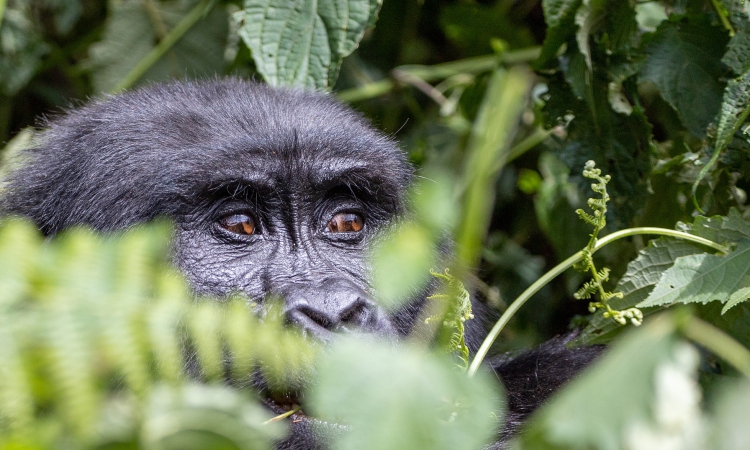

Golden Monkey Trekking in Rwanda – The golden monkey is a rare species currently on the endangered species list. They are found in the Virunga Mountains, Rwanda.
Golden monkeys are easily identified by the yellow patches all over their bodies. They are also known as ‘the Old World monkey.’
The only way to tell them apart is by their noses. Most golden monkeys have their noses pointing to the side, but if you take a closer look, you will see that their noses point upwards.
Golden monkey trekking in Rwanda takes place mainly in the Volcanoes National Park located in the Virunga Mountains. This trek only has one session per day, which begins in the morning.
Participants who are willing to join the trek should arrive at the headquarters at 7:00 a.m. for a briefing before the trek commences.
The headquarters is only 15 minutes from the park. There are two groups of golden monkeys in Rwanda. The largest group is located in Sabyinyo with 80 to 100 monkeys.
This is the most visited group in Rwanda. The second group is located in Volcanoes with slightly fewer monkeys.

Trekking Permit & Costs
Permits for golden monkey trekking in Rwanda are $100 per person. The beauty of golden monkey trekking in Rwanda is that there is no age limit and no limit on the number of people who can take part in the trek.
The golden monkeys are easy to spot because most of them live directly under the volcanoes and can be seen swinging on the bamboo trees of the forest.
Tourists can see monkeys with short tails that have been cut off because they get stuck in the bamboo trees.
They have an hour to observe the monkeys and learn about their characteristics from the experienced guide who accompanies them.
The best way to find the monkeys is by following leftover bamboo shoots that the monkeys leave behind after eating.
The golden monkeys also roam freely in the open and eat cones and food left by farmers near the forest, making it easy for tourists to see them swinging back and forth.
The golden monkey is one of the endemics of the Albertine Region. ‘Endemic’ is a term used to describe a species that is limited to a particular area.
The Albertine Region is made up of valleys and mountains, with various tree species making up the surrounding forests.
After looking at the different characteristics of the golden monkeys, we are now going to discuss how to go on a golden monkey trekking safari in Rwanda, where to go, and what you need for this tour.

What to Carry While on a Golden Monkey Trek
To enjoy the golden monkey trekking experience, there are a few things you need to know. What to Wear for Gorilla Trekking.
For photography, flash is not allowed as it frightens the monkeys. You will need to bring food or snacks as well as water for the hike, as there are no other stops along the way.
It is best to pack breakfast from your hotel or some snacks to eat as you hike. You will need a rain jacket as the weather in this area is unpredictable.
To protect yourself from the heavy rains, especially in the morning, you will need good hiking shoes that won’t slip on the wet ground.
A wide-brimmed hat is recommended when it is hot as it shields you from the sun. You will also need repellent to prevent insect bites.
Since the yellow-patched primates have been declared endangered since the 1980s, we will discuss them in the form of questions to gain a better understanding of these animals.

How Do Golden Monkeys Communicate with Each Other?
Monkeys are one of the most intelligent species on the planet, and they communicate with each other in a variety of ways.
Scientists have discovered how the golden monkey communicates with each other. They use gestures such as hand movements, vocalizations, and facial expressions to communicate.
They often wave their hands around to tell each other what they need, and most of the time, they communicate with a goal in mind.
Young golden monkeys typically use calls to signal to the older monkeys that they are submissive.
Male golden monkeys use calls to signal that they own the habitat and as a way to show aggression. Females use calls to bring the group of golden monkeys together.

Where Do the Golden Monkeys Sleep?
Most people think that golden monkeys live in the open in the trees, but what they don’t know is that they weave bamboo plants together to form nests where they build their homes.
The bamboo trees are woven together to form beds where they spend their days.
It is estimated that the population of golden monkeys in Rwanda is between 2,500 and 3,500, but it is decreasing at a rapid rate.
They are found in the Albertine area of the Virunga forest, but they have been put in danger due to human activities such as cutting down trees to get large plots of land for agriculture and settlements.
It is believed that one of the reasons for the decline of the golden monkeys is the limited area of their habitat.
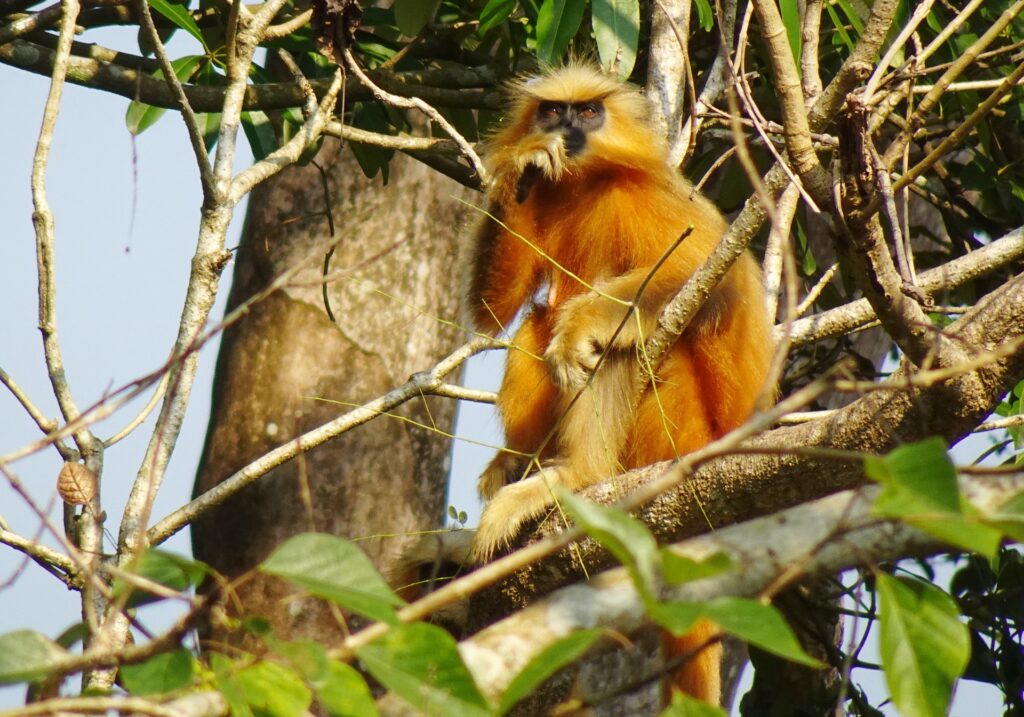
What Do the Golden Monkeys Feed On?
The feeding spots for golden monkeys are usually in places where they sleep so that they can easily access food.
The golden monkeys travel to the food spots or foliage and bring the food back to the group, especially for the young.
Golden monkeys are mainly herbivores and eat the plants found in the forest.
They also feed on fruits, but their main food is bamboo.
Golden monkeys adapt to the seasonal changes in the forest and can eat anything edible, such as shrubs, larvae, flowers, branches, and shoots.
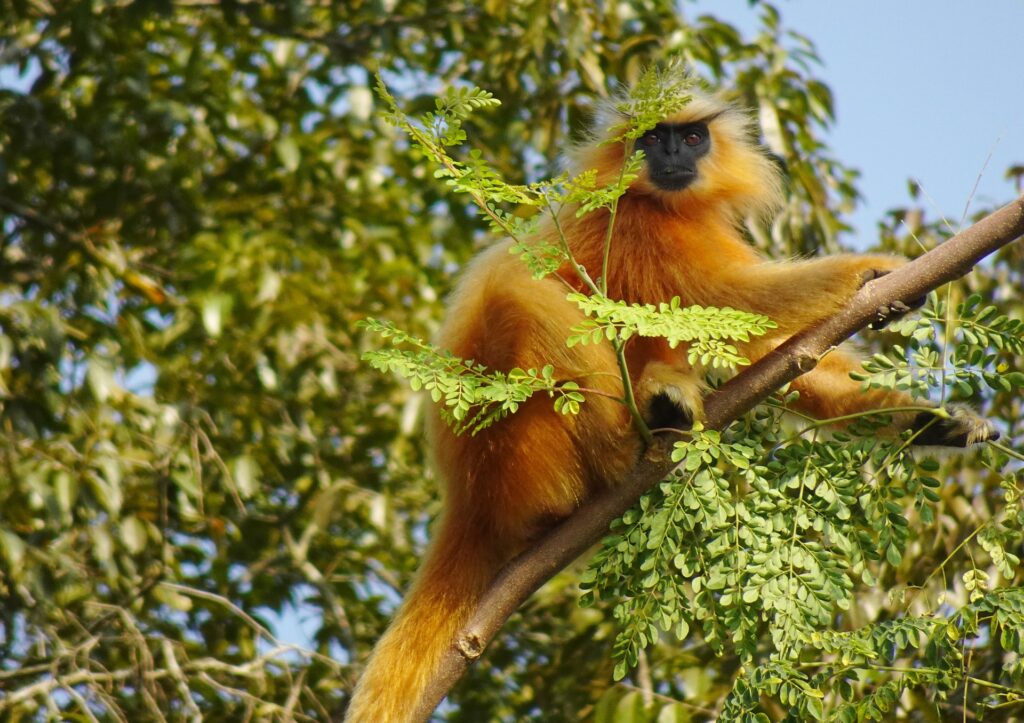
How Do the Golden Monkeys Live?
The golden monkey lives in groups of between 30 and 80, with one male dominating the rest.
The male travels from group to group and is able to mate with all the females in each group, while the female guards only one territory.
Golden monkeys live for 20 years and are very social animals, living in groups led by one male.
During the day, they are very active, jumping from tree to tree.
They sleep on top of bamboo trees in self-built nests in the forest, and when they sleep, they crowd into groups of four for protection, especially for the young.
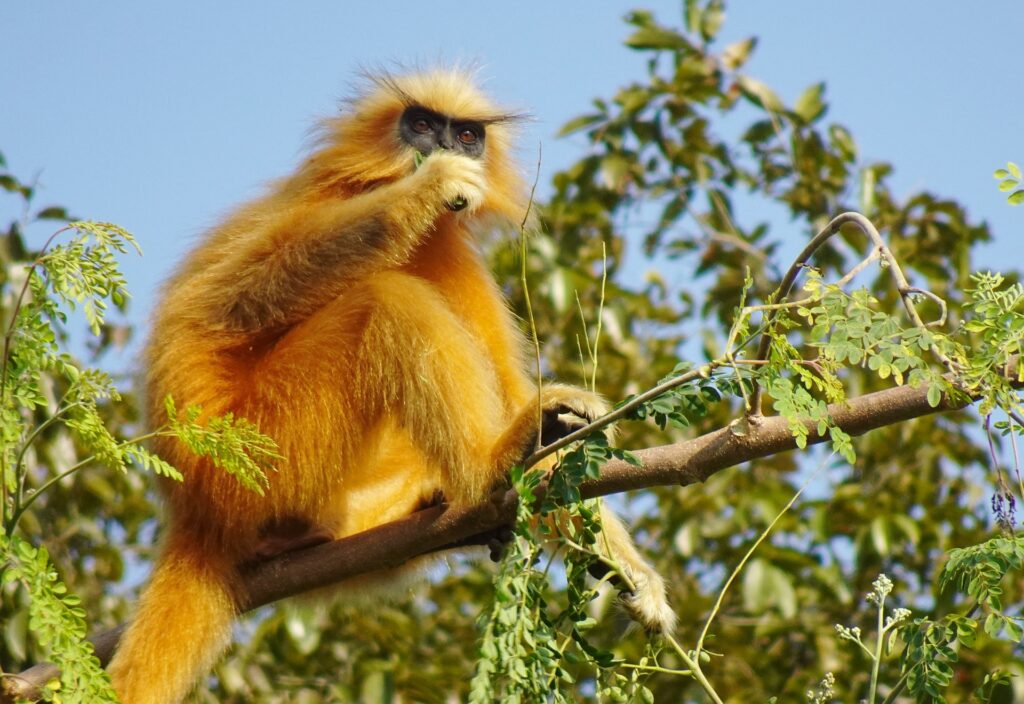
The Mating Habits of the Golden Monkeys
There is little information about mating in golden monkeys, but it is thought that the females always initiate the mating process.
This is because there is always one dominant male in the group, so the monkeys become polygamous, with one golden monkey mating with every female in the group.
Males live in a group temporarily for a certain period before moving to other groups to mate again.
Females give birth every two years because their gestation period is only five months, and they give birth to only one baby, just like humans.
The baby will be well-developed and nursed by the mother during the first few months.
As time passes, the mother stops nursing the baby to prepare for the next breeding period.
Once the monkey reaches puberty, it leaves its natal group and joins the older monkeys.
In conclusion, golden monkey trekking in Rwanda offers a unique opportunity to observe these endangered species in their natural habitat.
The experience provides insight into their communication, nesting habits, diet, social structure, and mating behaviors, making it a memorable and educational adventure for participants.
It is an exciting and thrilling experience as you’ll get to see various primates along the way, but the golden monkeys are the stars of the show.