Volcanoes National Park sits in Rwanda’s Northern Province and covers 160 square kilometers of protected volcanic terrain, best known as the home of Rwanda gorilla trekking. Below are the key facts about the park, from its founding and geography to its wildlife, vegetation, and the best time to visit.
Quick Facts About Volcanoes National Park
- Location: Northern Province, Rwanda
- Size: 160 square kilometers
- Established: Early 1920s, as a wildlife conservation area
- Number of volcanoes: Five, part of the eight-volcano Virunga range
- Key wildlife: Mountain gorillas, golden monkeys, forest buffalo, over 200 bird species
- Main activity: Gorilla trekking
- Best time to visit: June to September and December to February
Location and Geography
Volcanoes National Park is located in the Northern Province of Rwanda, near the town of Musanze.
It covers 160 square kilometers and was established in the early 1920s as a wildlife conservation area, making it one of Africa’s oldest national parks.
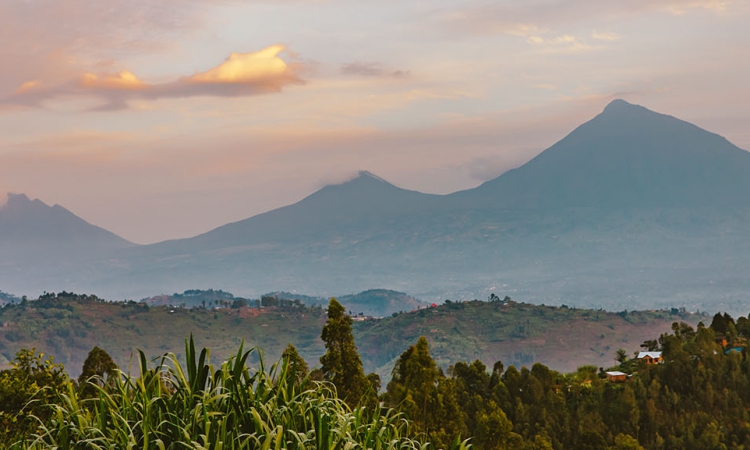
One of the defining characteristics of Volcanoes National Park is its volcanic landscape. The park takes its name from five major volcanoes within its boundaries: Karisimbi (4,507 m), Muhabura (4,127 m), Gahinga (3,474 m), Bisoke (3,711 m), and Sabyinyo (3,634 m).
These volcanoes form part of the wider Virunga range, which extends across the border into Uganda and the Democratic Republic of Congo.
History and Conservation
When Dian Fossey established her gorilla research station in the park in 1967, it drew significant international attention and helped make Volcanoes National Park the most visited park in Rwanda.
The Karisoke Research Center, founded by Fossey, played a major role in curbing poaching that had previously gone largely unchecked.
Fossey secured funding for the park and directed most of it toward gorilla conservation and research.
As a result, the park’s identity became closely tied to Dian Fossey’s research work on endangered mountain gorillas, a legacy that still shapes conservation efforts in the park today.

Thousands of tourists visit Volcanoes National Park each year, drawn by its mountain scenery, lakes and rivers, forests, mountain gorillas, golden monkeys, birds, and other wildlife.
Vegetation Zones in Volcanoes National Park
Another key characteristic of Volcanoes National Park is its layered vegetation, which changes with altitude. There are four main vegetation types found in the park:
- Hagenia/Hypericum vegetation: found at high altitudes, up to about 3,300 m
- Afro-Alpine vegetation: found at 4,000 m or higher
- Sub-Alpine vegetation: dominated by bamboo forests on the lower slopes
- Mixed montane forest: found at the park’s lower elevations, transitioning into the bamboo zone
This range of vegetation zones supports a wide variety of wildlife, from ground-dwelling mammals in the lower forests to gorillas and golden monkeys in the higher bamboo and Hagenia zones.
Wildlife Facts About Volcanoes National Park
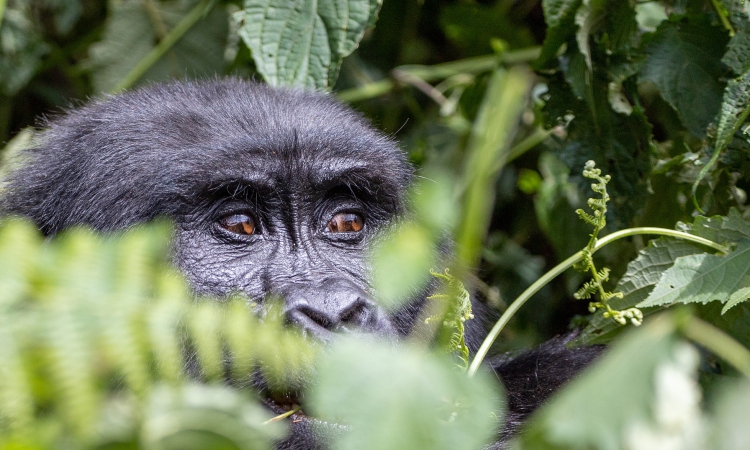
The variety of animals in Volcanoes National Park is extensive, with mountain gorillas as the park’s key attraction.
The park is home to about 30% of the world’s remaining mountain gorillas, along with golden monkeys, forest hogs, bush pigs, leopards, duikers, spotted hyenas, forest buffalo, and elephants.
Bird watchers will find over 200 recorded bird species in the park, with the Rwenzori turaco and various francolin species among the most sought after.
The combination of high-altitude forest, bamboo zones, and volcanic terrain gives Volcanoes National Park one of the richest concentrations of primates and forest wildlife in East Africa.
Top Activities in Volcanoes National Park
Gorilla trekking is the most popular activity in Volcanoes National Park, but it is far from the only one.
Other activities include visiting the graves of Dian Fossey and other conservationists, golden monkey trekking, mountain hiking, visiting the Iby’Iwacu cultural village, and touring Lake Burera and Lake Ruhondo.

Travelers looking for a fuller picture of Volcanoes National Park characteristics often combine gorilla trekking with one or two of these additional activities during a multi-day visit.
What Time of Year Is Best to Visit Volcanoes National Park?
The dry season, from June to September, is usually considered the best time to visit, since hiking and gorilla trekking are both easier on drier trails. A second, shorter dry season runs from December to February.
The rainy season falls into two periods: a longer wet season from March to May, and a shorter one in October and November.
During the wet season, the park is greener, quieter, and less crowded, which appeals to travelers who prefer a more private experience over easier trail conditions.
The park can be visited at any time of year, and its main activities run year-round, regardless of season.
Volcanoes National Park Facts: Summary
Volcanoes National Park in Rwanda is a significant conservation area known for its mountain gorillas and wide range of wildlife.
Visitors can take part in activities such as gorilla trekking, bird watching, and mountain hiking, with the dry season being the most popular time to visit.
Book your tour to experience these facts firsthand, from the park’s volcanic peaks to its gorilla families and forest wildlife.