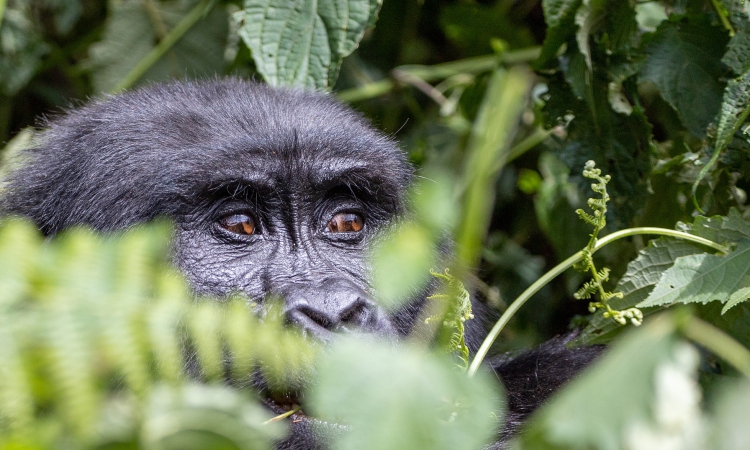
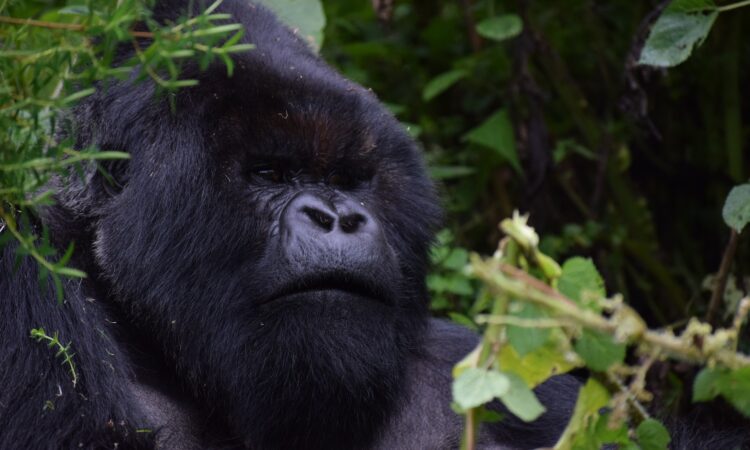
Gorilla Lifecycle – The gorilla lifecycle comprises various stages from infancy to maturity.
The gorilla gestation period is about 8.5 months.
Gorillas have a very low birth rate, reproducing every 4 to 6 years because they do not mate again until the baby gorilla reaches 4 to 6 years old.
Female gorillas usually produce 2 to 6 offspring in a lifetime.

Stages of the Gorilla Lifecycle
Infancy (0 to 3 years):
A baby gorilla is called an infant, and at birth, it weighs about 1.8 kg. Baby gorillas sit and walk upright at 3-4 months from birth.
Their mothers carry them up to the age of 6 months, and they cling to their mothers’ backs up to 4-6 years.
These infant gorillas breastfeed on their mothers’ milk until they are 3-4 years old, just like humans.
As they grow, they start to explore their surroundings and play with siblings.
Juvenile Stage (4 to 10 years):
When gorillas reach 4 years old, they start to wean off their mothers’ milk and begin feeding on solid foods.
Gorillas at this age are called juveniles.
During this stage, the gorillas do most activities independently.
They spend time playing, climbing trees, and learning social skills from family members.
They weigh about 60 to 70 kg during this age.
Adult Stage (11 and above):
When a gorilla reaches the age of 11 to around 15 and above, they are considered adults.
Males become blackbacks, and females become sexually active at this age, typically before the males.
The male gorillas continue to grow and gain weight, while the females stop growing taller but may continue to gain weight.
When blackbacks begin growing a patch of grayish hair on their backs, they become silverbacks.
The silverback usually weighs about 136 kg. On average, the lifespan of a gorilla is about 35-40 years.
Simultaneously, the gorilla lifecycle is a fascinating and complex process that is essential for the survival of these magnificent creatures.

More about Gorillas
Gorillas are predominantly ground-dwelling, majestic herbivorous apes that occupy the tropical forests of equatorial Africa.
The Gorilla genus is subdivided into two species: the Eastern and Western gorilla, with approximately 4-5 subspecies.
The Eastern gorilla is identified by its darker fur color and some other minor morphological variations, making them easily distinguishable from the Western gorillas.
They are the largest living primates, with an average height of 1.25-1.8 meters and weighing over 100-270 kg, with an arm span of 2.6 meters, entirely dependent on the species and sex.
Gorillas live in troops led by a dominant silverback.
They inhabit tropical or subtropical forests in sub-Saharan Africa and live for about 35-40 years.
Scientific Classification of Gorillas:
- Domain: Eukaryota
- Kingdom: Animalia
- Phylum: Chordata
- Class: Mammalia
- Order: Primates
- Suborder: Haplorhini
- Infraorder: Simiiformes
- Family: Hominidae
- Subfamily: Homininae
- Tribe: Gorillini
- Genus: Gorilla