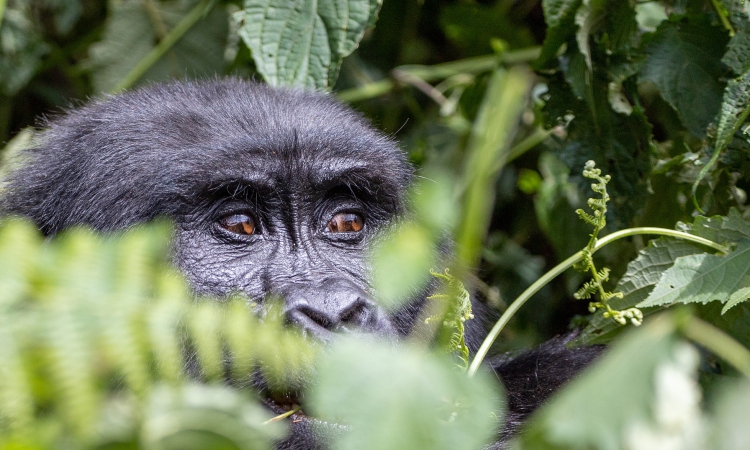
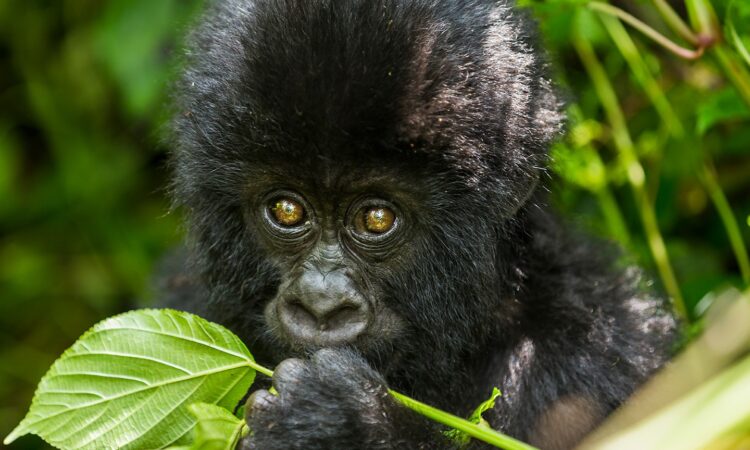
Why can’t you make eye contact with mountain gorillas? – Deep in the heart of Central Africa’s lush rain-forests, encounters with gorillas are truly life-changing.
However, it’s essential to understand the significance of eye contact in the primate world to ensure a safe and respectful interaction.
In the animal kingdom, direct eye contact can convey dominance, submission, or threat, while in humans, eye contact can build connections and show confidence.
However, these rules do not apply to primates. In fact, making eye contact with gorillas, especially the dominant silverback, is strictly not advised.
While on a gorilla trekking safari in Uganda or Rwanda, guidelines are provided to ensure a safe and enjoyable experience.

One of the crucial rules is to avoid eye contact with silverback gorillas, as it can be perceived as a challenge or threat to their family, and their primary responsibility is to protect their family from all kinds of threats.
If you maintain eye contact with a silverback, they may feel threatened and charge at you, thumping their chests, making loud noises, and releasing a strong, unpleasant smell.
To avoid this, it is essential to look away modestly and avoid direct eye contact.
Before embarking on a gorilla trekking safari, tourists receive a comprehensive briefing at the park headquarters on the morning of the day of trekking.
The briefing covers guidelines for trekking mountain gorillas, and during the actual trek, a park ranger guide leads the group.
If concerns arise regarding a gorilla’s behavior, the visit may end to prevent potential attacks.
Below are some of the guidelines, rules, and regulations to follow during gorilla tracking.
- Before embarking on a gorilla trekking safari, tourists should ensure they are in good physical condition and health. This is important because mountain gorillas are extremely vulnerable to human diseases, and an infection can be devastating to their population.
- When in the presence of mountain gorillas, it is essential to look away while sneezing to prevent any potential transmission of germs. If you are detected to be ill, you may be prevented from trekking with gorillas to protect their health.
- Flash photography is strictly prohibited when taking pictures of mountain gorillas. The flash can irritate and disturb the gorillas, causing unnecessary stress. If your phone or camera has a flash feature, please turn it off before taking photos.
- Maintain a safe distance of at least 7 meters (23 feet) from the gorillas at all times. Touching or petting them is strictly forbidden as they are wild animals and may react unpredictably.
- To prevent the risk of high disease transmission, visitors are not allowed to smoke cigarettes or drink within a 200-meter radius of the gorillas. This includes dropped food, which can become a source of infection to gorillas.
- When observing mountain gorillas, it is crucial to maintain silence or speak in low tones. Loud screaming or talking can startle and threaten them, leading to unpredictable behavior.
- During observations, stay in tight groups and remain calm if the gorillas charge at you. This helps to minimize any potential threats and ensures a safe experience.
In conclusion, encountering mountain gorillas in their natural habitat is a thrilling experience that requires respect, awareness, and adherence to guidelines.
By understanding the significance of avoiding eye contact, maintaining a safe distance, and following park rules, tourists can ensure a safe and enjoyable experience for both themselves and the gorillas.
Remember, responsible tourism is the key to preserving these incredible creatures and their habitats.
By being mindful of our actions and respecting their space, we can help protect and conserve mountain gorillas for generations to come.