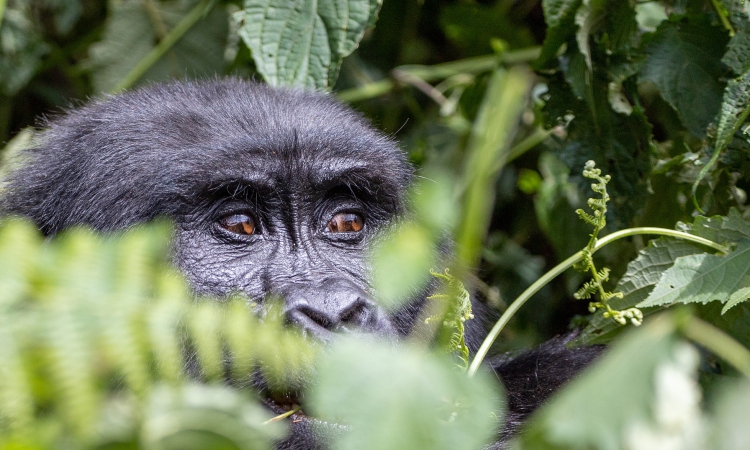

Mountain gorilla census – Based on the research carried out, the mountain gorilla population has grown to 1,063 individuals in 2024, up from 1,004 individuals recorded in 2018, which was a very good number compared to 2010 when the population was roughly calculated to be 786 mountain gorillas in the wild.
Half of the mountain gorilla population is found in Bwindi Impenetrable National Park in Uganda.
In the past seven years, the number of mountain gorillas is believed to have increased by 26.3%, with an average annual growth rate of 3.7%.
In 1981, the census estimated only 254 mountain gorillas in the wilderness, but since then, conservation efforts have outstandingly improved.
For example, in Bwindi Impenetrable National Park, there was a 6% increase in the population of mountain gorillas in 2006 from 2002.
From 1997 to 2006, the population increased by 12% in Bwindi Impenetrable National Park.

Using the traditional methods of collecting dung samples from nests, the mountain gorilla census team is able to estimate the mountain gorilla population.
Gorilla families habituated for research experience higher population growth compared to unhabituated mountain gorillas.
Although mountain gorillas were eliminated from the list of critically endangered apes, they still depend on conservation efforts to survive.
They are threatened by different dangerous activities like poaching, habitat loss, disease outbreaks, war, civil unrest, to mention but a few.
You can also play a big role in conserving mountain gorillas and increasing their number by going out on gorilla trekking in Africa.
The money generated from gorilla permits helps in mountain gorilla conservation, and your purchasing a gorilla permit can be a great contribution.
Mountain gorillas are subspecies of the Eastern gorillas that thrive in the Virunga Mountain area stretching across Rwanda, Uganda, and the Democratic Republic of Congo.
They share 98% of their DNA with humans, making them chimpanzees’ close relatives.
Mountain gorillas were extinct during the 19th century, but due to the conservation efforts by the great American primatologist Dian Fossey, they were able to survive.
She fully dedicated her life to the conservation of mountain gorillas, but unfortunately, she tragically lost her life in 1986 in Rwanda.
In conclusion, carrying out mountain gorilla censuses helps in knowing if the population of mountain gorillas is growing or declining.
According to the above information, it is clear that the population of mountain gorillas has been increasing over the years, and this is due to the conservation efforts carried out.
If you are looking for a breathtaking memorable experience, go on a gorilla trekking safari in Africa; you will not only enjoy the trek but also contribute to the conservation of mountain gorillas.