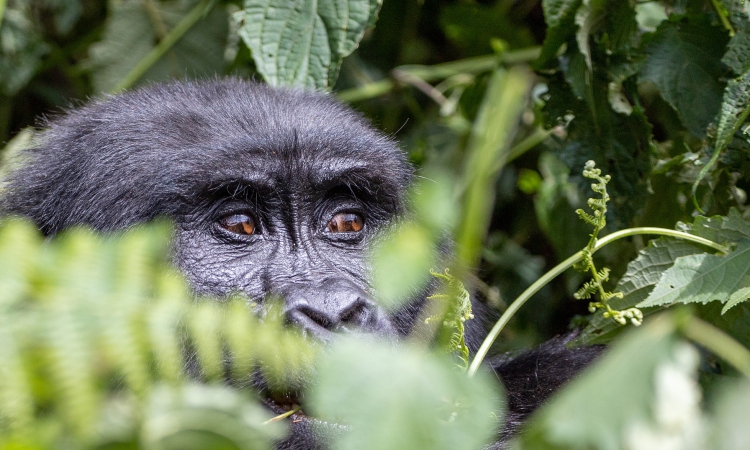

What is the largest gorilla species? Gorillas are one of the largest primates in the world, inhabiting the tropical and subtropical rain-forests of Africa.
Gorillas are primarily herbivores, feeding mostly on bamboo shoots, fruits, stems, pith, leaves, bark, roots, and sometimes supplementing their diet with ants, insects, as well as termites.
Occasionally, gorillas also consume soil. Gorillas are wary of caterpillars and chameleons; however, infant gorillas are always intrigued by anything moving, so they will give way to chameleons and caterpillars.
Gorillas do not drink water because most of the food they consume contains a lot of moisture.
They do not mind the rain and use logs to cross streams.
There are two types of gorillas in the world: the eastern gorilla and the western gorilla.
The Eastern gorilla is further subdivided into the Eastern lowland gorillas and the mountain gorillas, while the Western gorilla is divided into the Western lowland gorillas and the Cross River mountain gorillas.

The Eastern Lowland Gorilla
The eastern lowland gorilla, also known as Grauer’s gorilla, is the largest living gorilla species.
It is distinguished by its short muzzles, dark coloration, and stocky bodies. Males weigh up to 272 kilograms and stand around 1.76 meters in height, while females weigh less and stand about 1.60 meters in height.
The Eastern lowland gorilla species inhabits the subtropical rain-forests of eastern Democratic Republic of Congo.
The population of the eastern lowland gorilla was estimated to be around 17,000 individuals in the 1990s.
However, the population has decreased by more than 50% in recent years.
The eastern lowland gorilla range has decreased from over 8,000 square miles in the 1990s to about 5,000 square miles in the present day.
Although the Eastern lowland gorilla is the largest gorilla species, it is still listed as an endangered species on the International Union for Conservation of Nature’s (IUCN) Red List.
The main threats to eastern lowland gorilla populations are habitat loss, disease, poachers, as well as civil unrest in the Democratic Republic of Congo.
The Western Lowland Gorilla
The western lowland gorilla is the only gorilla subspecies that can survive in a zoo.
It is the smallest gorilla subspecies and is mainly found in the Democratic Republic of Congo, Equatorial Guinea, Gabon, Angola, Cameroon, and the Central African Republic.
Mountain Gorillas
The mountain gorilla is one of the subspecies of Eastern lowland gorillas thriving in the tropical rain-forests of Rwanda, Uganda, and the Democratic Republic of Congo.
This gorilla subspecies cannot survive in zoos.
According to the population of 2018, there were only 1,004 mountain gorillas left in the wilderness, but as of 2024, there are 1,063 mountain gorillas in the wild.
This is the gorilla species you will encounter when you go for gorilla trekking in Uganda and Rwanda.
Cross River Gorilla
The Cross River gorilla was first identified as a subspecies by Paul Matschie in 1904.
This species inhabits the forested hills in the Cameroon-Nigeria border region.
It is the most endangered gorilla species, with about 250 mature individuals remaining in the wild.
In conclusion, the eastern lowland gorilla species is the largest living gorilla species in the world, but it is still listed on the IUCN’s list as an endangered species.