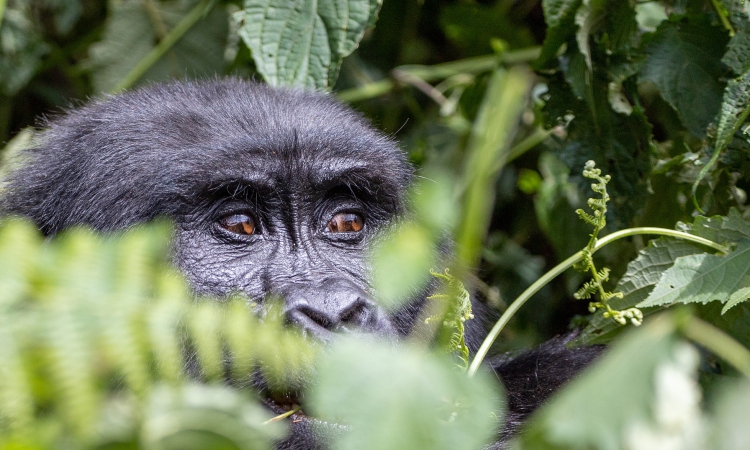

Why are Gorillas Poached? The illegal hunting and poaching of gorillas became very rampant throughout the 20th century, greatly endangering gorillas and making them apparently very scarce.
Current statistics of the total population of gorillas in their natural habitats in Uganda, Rwanda, and the Democratic Republic of Congo are said to be about 1,063 individuals, which is alarming.
Gorillas are poached for wild meat, in some societies used as magical charms and for trade. Their heads, hands, and feet are the major aims for poaching.
Gorillas became a major aspect of poaching for wild meat sellers simply because of the great weight they provide. They also act as trophies when sold to animal traffickers.
Meanwhile, some people hunt gorillas as a source of pride to display their immense physical strength, while others hunt them accidentally when their main intention is to hunt other animals.
It should also be noted that gorilla hunting has been fueled by the discovery of oil in the Democratic Republic of Congo, leading to ruthless gorilla hunting.
This is due to the fear aroused among miners by the presence of these gorillas, which seemed dangerous and potential carriers of diseases like Ebola.
Gorilla poaching has greatly reduced the gorilla population worldwide, hence they are considered endangered.

A Brief about Gorillas
Gorillas are predominantly ground-dwelling, majestic, herbivorous apes that occupy the tropical forests in equatorial Africa. The Gorilla genus is subdivided into two: the Eastern and Western gorilla, with approximately 4-5 subspecies.
The Eastern gorilla is identified by its darker fur color and some other minor morphological variations, which make them easily distinguished from Western gorillas.
They are the largest living primates, with an average height of 1.25-1.8 meters, weighing over 100-270 kg, with an arm span of 2.6 meters each, entirely dependent on the species and sex.
Gorillas live in troops led by a dominant silverback. Gorillas always live in tropical or subtropical forests in sub-Saharan Africa and typically live for about 35-40 years.
Scientific Classification of Gorillas:
- Domain: Eukaryota
- Kingdom: Animalia
- Phylum: Chordata
- Class: Mammalia
- Order: Primates
- Suborder: Haplorhini
- Infraorder: Simiformes
- Family: Hominidae
- Subfamily: Homininae
- Tribe: Gorillini
- Genus: Gorilla