Types of Gorillas – Gorillas are the largest of the great apes and one of the closest relatives of humans by genes.
Gorillas share 98% of their genetic code with humans and display many behaviors and emotions common to humans, such as sadness and laughter, similar to bonobos and chimpanzees.
Wild gorillas are only found in some of Africa’s tropical forests, wetlands, marshes, highlands, and mountains.
Gorillas are gigantic and powerful primates with muscular arms, thick chests, large nostrils, and black or brownish hair. Hair covers the entire body except for the face, hands, feet, and chest (for older silverbacks).
Gorillas are vegetarians that feed on leaves, fruits, and sometimes insects.
They live in groups led by dominant silverbacks whose strength ensures the family’s safety.

Types of Gorillas
There are two types of gorillas:
- The Eastern Gorilla
- The Western Gorilla (Gorilla gorilla)
The Western Gorillas
Western gorillas are the most abundant species. Their nose structure is different, and they have a lighter color than the Eastern gorilla.
Western gorillas are further divided into two subspecies:
- The Cross River Gorilla (G. gorilla diehli)
- The Western Lowland Gorilla (G. gorilla gorilla)
The Eastern Gorilla (G. beringei)
The Eastern gorilla also has two subspecies:
- The Mountain Gorilla (G. beringei beringei)
- The Eastern Lowland Gorilla (G. beringei graueri)
The Eastern Lowland Gorilla is now generally referred to as the Grauer’s Gorilla, the largest of all the apes, found in Uganda, Rwanda, and the Democratic Republic of Congo.
The Four Gorilla Subspecies
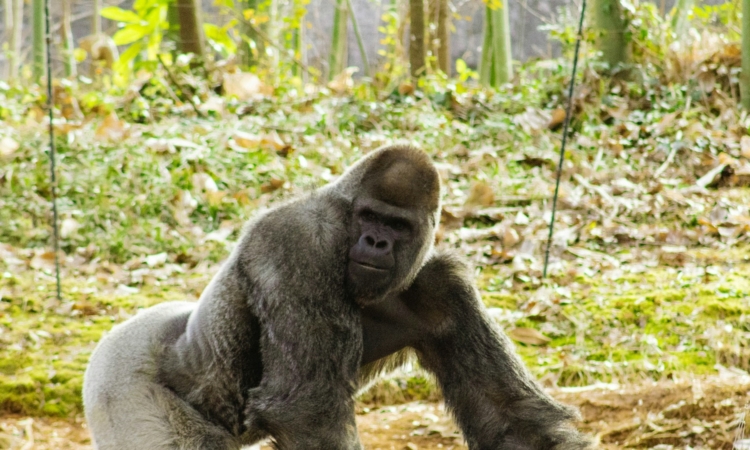
Western Lowland Gorillas (G. gorilla gorilla)
The Western Lowland Gorilla lives in the lowland forests of Central and West Africa (Angola, Equatorial Guinea, Central African Republic, Cameroon, Gabon, Democratic Republic of the Congo, and the Republic of the Congo).
They are the smallest but most abundant of all the four gorilla subspecies and are the most difficult to estimate in terms of population because they live in some of the largest and densest forests of Africa.
It is estimated that over 350,000 remain in the wild.
Western Lowland Gorillas are also the most commonly seen species in zoos and stand out because of their greyish/reddish fur.
Although they are the most numerous of all the gorilla subspecies, their overall population is believed to have declined by 60% in the last 25 years.
Their greatest threats are humans and the Ebola virus, which wiped out over 30% of their population in 2003.
Cross River Gorillas (G. gorilla diehli)
The Cross River Gorilla was classified as a distinct subspecies in 2000 and is listed as critically endangered by the IUCN in their 2006 List.
These gorillas inhabit a stretch of 3,000 square miles of forested mountains and highlands in Cameroon and Nigeria.
They live in the most northern/western part of Africa (considering gorilla dispersion). Cross River gorillas weigh about 440 pounds and can stand up to 5 feet tall.
They are the most threatened of all the gorilla subspecies, with less than 350 remaining in the wild.
Cross River gorillas are particularly vulnerable to extinction because they occupy a small stretch of land and come into frequent contact with humans, making them more aggressive, elusive, and difficult to study.
The greatest threats to them are loss of genetic diversity, habitat loss, and poaching.
Grauer’s Gorilla or Eastern Lowland Gorilla (G. beringei graueri)
Eastern Lowland Gorillas are found in the eastern part of the Democratic Republic of Congo, specifically in Kahuzi-Biega National Park, Odzala-Kokoua National Park, Maiko National Park, and areas around the Itombwe Massif.
Grauer’s Gorilla is the largest of all the gorilla subspecies, with a stocky body, a short muzzle, and larger hands.
Like Mountain Gorillas, they have black coats but with shorter hair on the head and body. They are the third most critically endangered species of the three gorilla subspecies.
Most threats come from poaching and habitat loss.
Mountain Gorillas (G. beringei beringei)
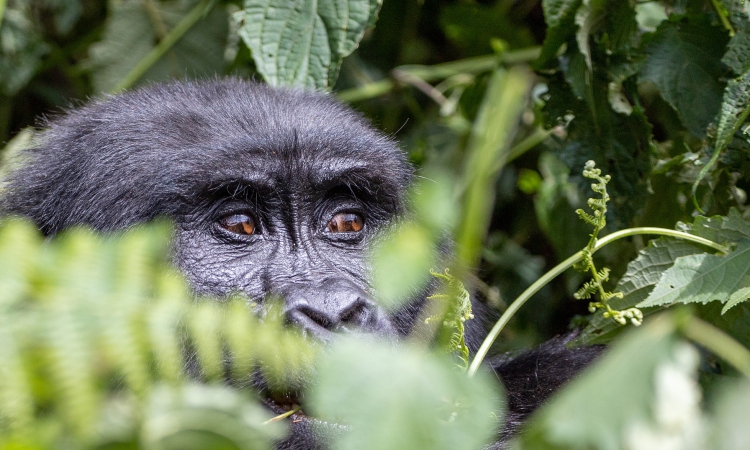
Mountain Gorillas are one of the two subspecies of the Eastern Gorillas. They are only found in the Virunga Mountain regions of the Democratic Republic of Congo, Rwanda, and Uganda.
Mountain Gorillas are not as heavy as the Eastern Lowland Gorilla and generally live in forests at higher elevations (8,000 to 12,000 feet) and on mountain slopes.
They stand out because of their thick and long hair/fur, which protects them from the cold temperatures on mountain slopes.
Mountain Gorillas are the second most endangered of the four gorilla subspecies.
They can only be seen in the wild or at the Senkwekwe Gorilla Orphanage in Congo.
They are threatened by habitat loss due to continued human encroachment on forests and mountain slopes.
Some are forced to migrate higher up the cold mountain slopes, which could threaten their health.