This guide covers everything you need to know about Rwanda gorilla safari packages and Rwanda gorilla trekking tours, including permit costs, the best time to visit, and what to expect on the trek. It also covers general information about mountain gorillas and other primates found in Rwanda.
Rwanda is one of only three countries in the world where you can go gorilla trekking in the wild. These gorillas live in Volcanoes National Park, within the Virunga Mountains in the Virunga Conservation Area. The mountain range includes Mount Nyiragongo, Mount Mikeno, Mount Nyamuragira, Mount Bisoke, Mount Karisimbi, Mount Muhabura, Mount Sabyinyo, and Mount Gahinga.
Recommended gorilla trekking companies operate across Uganda, Rwanda, and Congo, and can organize a Rwanda gorilla safari at competitive prices, with both luxury and budget gorilla trekking packages available.
Book gorilla trekking Rwanda tours today through one of our recommended tour operators to get started.
Rwanda Gorilla Trekking Tours & Packages
Browse our Rwanda gorilla trekking tours and packages below, ranging from a quick one-day trek to a full 10-day safari across Rwanda’s national parks.
- 1-Day Express Gorilla Trekking Tour
- 2-Day Rwanda Gorilla Safari & Gorilla Trekking Tour
- 3-Day Rwanda Gorillas & Golden Monkeys Trekking Tour
- 4-Day Double Gorilla Trekking Tour
- 4-Day Rwanda Gorillas, Golden Monkeys & Dian Fossey Hike
- 5-Day Rwanda Gorillas & Chimpanzee Trekking Tour
- 5-Day Rwanda Gorillas & Wildlife Safari
- 5-Day Rwanda & Uganda Gorilla Trekking Tour
- 7-Day Rwanda Primates, Culture & Wildlife Safari Tour
- 10-Day Best of Rwanda: Gorillas, Chimps & Wildlife Safari
See the full list of Rwanda safari tours, or contact a tour operator to customize your itinerary.
What You Ought to Know About Gorilla Trekking in Rwanda
Rwanda is generally an expensive destination. Do not be surprised by high-priced quotations. For luxury tourists, Rwanda offers a five-star experience comparable to only a few countries in the world.
If you plan a gorilla trekking safari Rwanda trip, budget for a higher cost than neighboring destinations.
Where to See Gorillas in Rwanda
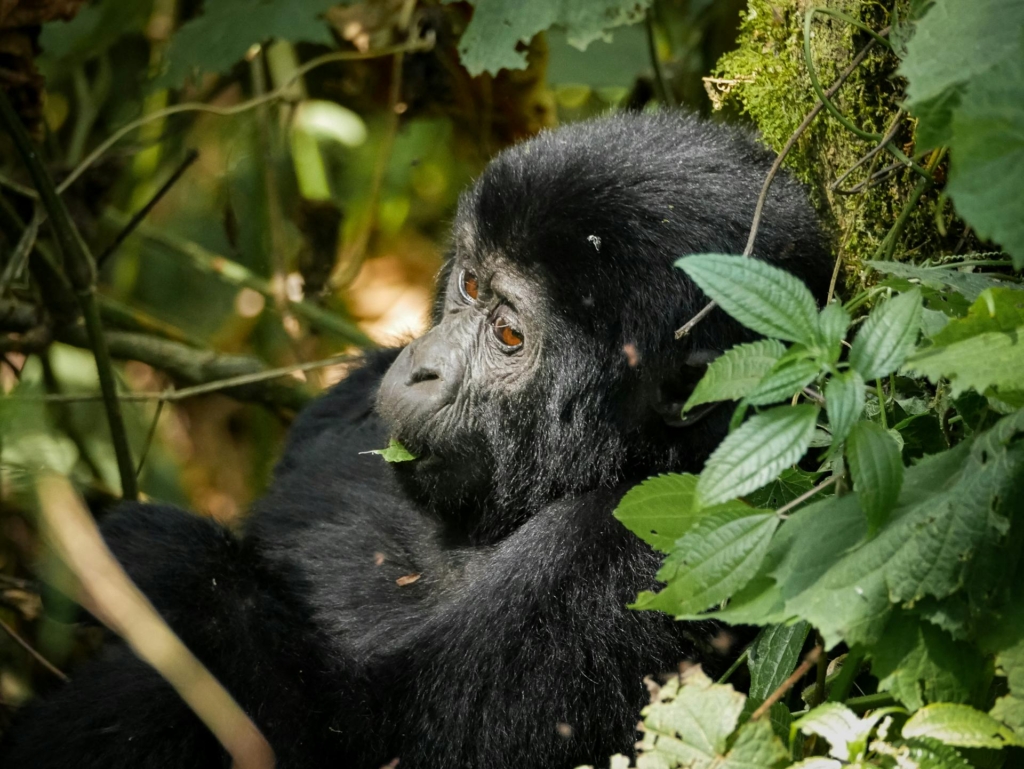
Rwanda is home to about 30% of the world’s remaining mountain gorilla population, all found in Volcanoes National Park.
In the 1960s, primatologist Dian Fossey set up a research base in the park to study these gorillas.
Gorilla trekking Rwanda tours in Volcanoes National Park attract thousands of tourists every year.
There are currently ten habituated mountain gorilla groups in Rwanda. The country is considered the most convenient place to see mountain gorillas due to its developed tourism infrastructure and professional guiding staff.
Rwanda has the most expensive gorilla permits in the region, at USD 1,500 per person per trek, but the chance of seeing gorillas on any given trek is over 99%.
Rwanda Gorilla Trekking Cost: How to Get a Permit
Rwanda gorilla trekking cost depends on four main factors: the permit fee, accommodation, transportation, and park-related extras. A gorilla trekking permit is a legal requirement for anyone who wants to trek gorillas in Volcanoes National Park. Understanding each cost in advance makes it easier to plan a realistic trip budget.
The permit system serves two purposes. First, it lets park authorities control how many people visit a specific gorilla group each day, which protects the gorillas from overexposure to human contact. Review the Rwanda gorilla trekking rules and regulations before your trip to make sure your experience is safe and respectful.
Second, the permit fee funds gorilla and habitat protection, along with the well-being of communities living near the park. A substantial portion of every permit fee returns to local communities and ongoing conservation work.
Rwanda Gorilla Permit Prices
According to the Rwanda Development Board (RDB), a standard Rwanda gorilla trekking permit costs USD 1,500 per person during peak season. See full Rwanda gorilla permit pricing and booking details. This fee covers one hour with a habituated gorilla group, park entry, and a guide for the day. Permits sell out quickly during busy months, so booking early is recommended.
Low Season Gorilla Permits in Rwanda
Rwanda low season gorilla permits make Rwanda gorilla trekking packages more affordable for travelers who want to spend more than one day tracking gorillas and visiting national parks. The low season gorilla permit fee for Volcanoes National Park is USD 1,050 per person, according to the RDB.
This is good news for budget travelers, since it represents a USD 450 saving per person compared to the standard rate. Rwanda introduced low season permits in 2017, after standard prices rose from USD 750 to USD 1,500. The price increase was meant to position Rwanda as a luxury tourism destination in Africa, and the country has since attracted investment in luxury lodges and conference centers.
Cost of Accommodation
Accommodation near Volcanoes National Park ranges widely by comfort level. Budget guesthouses or basic lodges cost around $50 to $100 per night, mid-range lodges cost between $150 and $400 per night with private rooms and quality dining, and ultra-luxury lodges such as Bisate Lodge and One&Only Gorilla’s Nest can range from $1,500 to over $3,000 per night. Staying closer to the park gates typically costs more but reduces early-morning travel time on trekking day.
Cost of Transportation
Transportation costs depend on the vehicle type and whether the trip is self-arranged or booked through an operator. A private transfer from Kigali to Volcanoes National Park costs between $150 and $250 per day per vehicle, while a round-trip in a private 4×4 safari vehicle typically runs between $250 and $350. Self-drive car hire costs less but is not recommended on the rougher roads near the park, since a sturdy 4×4 handles the terrain better than a standard rental car. Most full gorilla trekking packages bundle airport pickup, park transfers, and return to Kigali into one price.
Other Costs to Add to Your Budget
Beyond the permit, accommodation, and transportation, trekkers should budget for a few additional costs. Porters typically cost between $10 and $15 per trek, and hiring one supports the local community while making the hike easier on steep terrain. Guide and ranger tips are customary though not mandatory. Meals range from $2 to $6 at small local eateries, $8 to $15 at mid-range restaurants, and $20 to $40 at high-end hotel restaurants. Travelers should also set aside money for a Rwanda tourist visa and travel insurance that covers medical emergencies and evacuation.
Full Rwanda gorilla permit pricing and booking details are available through the Rwanda Development Board. Book your gorilla permit and tour together through a recommended operator to save time.
List of Rwanda Gorilla Families
Below are the habituated gorilla groups you can trek in Rwanda:
- Susa Gorilla Group (Susa A): 28 members, 3 silverbacks.
- Karisimbi Gorilla Group (Susa-B): 15 members.
- Sabyinyo Gorilla Group: 8 members, led by Guhonda.
- Amahoro Gorilla Group: 17 members, led by Ubumwe.
- Umubano Gorilla Group: 11 members, formed by Charles.
- Agashya Gorilla Group: Grew from 13 to 25 members.
- Kwitonda Gorilla Group: 18 members, originally from the Congo.
- Hirwa Gorilla Group: 16 members, including twins.
- Bwenge Family Group: 11 members, featured in Gorillas in the Mist.
- Ugenda Gorilla Family: 11 members, a nomadic group.
Private Gorilla Trekking in Rwanda
Private gorilla trekking in Rwanda lets you trek with a gorilla family as a single visitor.
This option costs significantly more, with a private gorilla permit priced at about USD 15,000.
How to Prepare for Your Rwanda Gorilla Trekking Tour
Here is a preparation guide for gorilla trekking:
- Book Your Permit in Advance: Book your gorilla permit in advance. Permits are limited to eight people per trek, prices rise during peak season, and only a limited number of gorilla families are available.
- Book Accommodation in Advance: Secure your accommodation ahead of time to avoid last-minute issues.
- Book Travel in Advance: Arrange your flights and transport well before your gorilla trek date.
- Prepare Physically: Be in good physical condition for hot, humid hiking conditions. You must also be free of airborne illness, since gorillas can easily catch human diseases.
- Bring the Right Documents: Carry your passport, visa, yellow fever vaccination certificate, and gorilla trekking permit.
Read our full gorilla trek preparation guide for more detail.
Is Gorilla Trekking Worth the Time and Money?

Gorilla trekking can be done at any time of year, and most visitors find it worthwhile for the following reasons:
- Funds gorilla conservation organizations
- Raises awareness of the need to conserve gorilla species
- Supports neighboring communities
- Helps maintain the health of gorilla populations
- Reduces poaching
- Boosts economic growth
- Builds cross-cultural connection between visitors and local communities
- Offers favorable weather and climate for travel
- Opens up opportunities for other activities nearby
- Encourages further wildlife research and conservation
See our full breakdown of whether gorilla trekking is worth it.
Why Is Gorilla Trekking in Rwanda So Expensive?
A gorilla trekking permit in Rwanda costs USD 1,500, more than in neighboring destinations, but most visitors find it worth the price.
Here is why the Rwanda gorilla trekking cost is what it is:
- Rwanda has the highest gorilla permit price in the region, at USD 1,500.
- Conserving mountain gorillas requires significant funding for conservationists, rangers, and veterinary staff.
- Protecting mountain gorillas comes with high ongoing maintenance costs.
- Permit fees fund both conservation and community development.
- Communities near the park benefit from new infrastructure, schools, and health centers.
- Demand for permits is high, while the global mountain gorilla population remains limited.
- Higher permit prices help regulate visitor numbers and protect gorilla habitat.
- Only visitors aged 15 and older can trek, with a maximum of one hour spent observing gorillas.
- The cost encourages visitors to value and respect the experience.
- Gorilla trekking offers an authentic encounter in the wild, unlike seeing gorillas in a zoo.
How Difficult Is Gorilla Trekking in Rwanda?

Gorilla trekking is an exciting wildlife experience, but it is not like a game drive or a zoo visit.
You will walk through rough terrain, dense vegetation, and water crossings, and climb hills and cross valleys.
The trek can be physically demanding, especially if you are not used to walking long distances or for extended periods.
Paths are not always clear, and the terrain can be tough underfoot.
You may also encounter insect bites, thorny bushes, unpredictable rainfall, and dense forest cover.
In some parks, altitude sickness can also be a concern.
The best tip is to be mentally prepared for gorilla trekking.
Expect unpredictable weather, tough terrain, and occasional changes in plans, which are common in the region.
Despite the physical demands, 98% of people who attempt gorilla trekking complete the trek.
Gorilla Tracking vs. Gorilla Trekking: What’s the Difference?

People often use “gorilla trekking” and “gorilla tracking” interchangeably, but they refer to two different activities.
Gorilla Tracking
Gorilla tracking is the process of locating specific gorilla families based on their last known location, overnight nesting site, and feeding area.
Rangers, guides, and researchers track gorillas for purposes such as research and population census.
Rangers also track gorillas to help visitors find them during a trek, which is why the chance of finding a gorilla family is around 99% even though gorillas move constantly within the park.
The tracking process is similar across all gorilla parks, including Bwindi and Mgahinga National Parks in Uganda, Volcanoes National Park in Rwanda, and Virunga National Park in the Democratic Republic of Congo.
Gorilla Trekking
Volcanoes National Park gorilla trekking tours involve visitors hiking into the rain forests of Bwindi Impenetrable National Park and Mgahinga National Park in Uganda, Volcanoes National Park in Rwanda, and Virunga National Park in the Democratic Republic of Congo, guided by experienced rangers.
The terrain across these parks is similar, featuring tropical rain forest and bamboo, though steepness varies depending on the specific mountains of the Virunga Massif.
Gorilla trekking usually begins early in the morning after breakfast.
Visitors report to their briefing point at 7:30 a.m., where rangers explain the trekking rules and assign each group a gorilla family to track.
A maximum of eight people are assigned to each gorilla family.
The trek itself can last between 1 and 8 hours, depending on terrain, gorilla movement, and the fitness of the group.
Meeting the gorilla family makes the trek worthwhile regardless of how long it takes.
Visitors get one hour to observe and photograph the gorillas, and can ask their ranger guide questions during this time.
After the trek, guests return to their driver and head back to their lodge for lunch or to catch a scheduled flight.
In short, gorilla tracking is how rangers locate gorillas for research and monitoring, while gorilla trekking is the guided visitor experience of hiking to see mountain gorillas in person.
How Long Does Rwanda Gorilla Trekking Take?
Trek duration depends on several factors, including where the gorillas spent the previous night and where food is available.
Other factors include the gorilla mating season, trekker fitness, path conditions, and group pace, since the group moves at the speed of its slowest member.
Because of these factors, gorilla trekking can take anywhere from 2 to 7 hours. Shorter treks are common, so 1 day gorilla trekking Rwanda and 2 day gorilla trekking Rwanda packages remain popular options for visitors with limited time. See our 1-day express gorilla trekking tour if you are short on time.
Minimum Age for Gorilla Trekking

The Uganda Wildlife Authority, Rwanda Development Board, and Institut Congolais pour la Conservation de la Nature all set a minimum age of 15 for gorilla trekking in their respective countries.
Children under 15 are not permitted to trek. In Uganda, children aged 10 and under may be assisted to trek in certain cases.
Anyone with an infectious illness, such as a cough or flu, is also barred from trekking, since gorillas can easily catch human diseases due to their vulnerable immune systems.
People with pre-existing health conditions like heart disease or breathing difficulties are also discouraged from gorilla trekking given the physical demands of the trek.
What to Wear for Gorilla Trekking in Rwanda
Pack the right clothing before your gorilla trek in Rwanda to make the experience easier and more comfortable. You will need:
- Long-sleeved shirts and long trousers
- Waterproof, sturdy hiking boots
- Sturdy gardening gloves
- A rain jacket
- A hat
- Insect repellent
- Sunglasses
- A warm sweater
See the full what to wear guide for more detail.
Essential Rwanda Gorilla Trekking Tips
Here are some tips to know before your gorilla trekking tour:
- Hire a Porter (about $15 USD per trek). This creates local jobs and gives you help carrying your pack up steep slopes.
- Be Polite when interacting with the gorillas. Stay quiet, calm, and follow your guide’s instructions.
- Bring Water and Energy Snacks. Your accommodation will typically provide these, but bring a favorite snack if you have one, since treks can run from one to several hours.
- Local Stretchers or Sedan Chairs are available for guests who find the terrain too difficult, for an additional fee. Reserve these in advance.
- For Photographers: a medium-zoom lens such as 24-70mm works better than a long lens in close range. Humidity can fog up lenses, flash photography is not allowed, and a waterproof bag will protect your camera. Charge your battery beforehand.
Read the full list of Rwanda gorilla trekking tips.
Gorilla Trekking Rules, Regulations, and Guidelines
Here are the gorilla trekking rules to follow in Rwanda:
- Trekkers must be aged 15 or older.
- A yellow fever vaccination is required.
- Park authorities verify identity and health before the trek.
- A group of 8 people can visit one gorilla family per day.
- Physical fitness is necessary due to steep, muddy terrain.
- Sick visitors are not permitted to trek.
- Rangers can refuse entry if they believe you pose a health risk.
- If unwell, stay behind and reschedule or request a refund.
- Gorillas can catch human diseases.
- Cover your mouth if you cough or sneeze.
- Keep the park clean and avoid littering.
- Stay at least 15 feet from the gorillas.
- If a gorilla charges, crouch down and do not run.
- Avoid staring directly at gorillas.
- No flash photography.
- Do not touch the gorillas.
- Avoid bright colors and sunglasses.
- Wear suitable hiking shoes.
- Bring water, a packed lunch, and a rain jacket.
- Wear long pants and use mosquito repellent.
See the full Rwanda gorilla trekking rules and regulations.
More Activities Besides Rwanda Gorilla Treks

Consider adding these activities to your itinerary alongside your gorilla trek.
Chimpanzee Trekking and Canopy Walk
Chimpanzee trekking takes place in Nyungwe Forest under the guidance of expert park rangers familiar with the forest’s territory.
It starts early in the morning at park headquarters with a briefing and document check.
As with gorilla trekking, rangers explain the rules before guiding participants through the park in search of chimpanzee groups.
Chimpanzees share over 98% of their DNA with humans, making them one of our closest relatives. Visitors often note their resemblance to humans in appearance and behavior.
Chimpanzees mainly eat leaves, stems, and fruit, and occasionally insects and ants.
Nyungwe Forest National Park also offers a canopy walk. Visitors can spend two to three hours on the suspended walkway, taking photos and watching wildlife move through the treetops.
See our 5-day gorillas and chimpanzee trekking tour to combine both experiences.
Wildlife Encounter
Wildlife safaris in Rwanda take place mainly in Akagera National Park. Akagera is home to Africa’s Big Five (lions, leopards, elephants, buffaloes, and rhinos), along with numerous bird species, vultures, antelopes, giraffes, and warthogs.
Game viewing takes place by safari vehicle or on foot. See our 5-day gorillas and Akagera wildlife safari to combine gorilla trekking with a game drive.
Best Rwanda Gorilla Trekking Tours: When to Go
Rwanda gorillas can be seen year-round, but the best times for the best gorilla trekking tours Rwanda has to offer are June to August and December to February.
Gorilla trekking Rwanda is well worth the time and effort. Every moment spent with the gorillas makes for a memorable trip.
Consider adding other activities to your itinerary beyond gorilla trekking to round out your Rwanda gorilla safari. Book gorilla trekking Rwanda tours today to get started, or browse our full list of Rwanda safari tours.
FAQs: Rwanda Gorilla Trekking Tours & Safaris
Here are answers to the most common questions travelers ask before booking a Rwanda gorilla trekking tour.
What is gorilla trekking in Rwanda?
Gorilla trekking is a guided hike through Volcanoes National Park in Rwanda to observe mountain gorillas in their natural habitat, accompanied by an experienced park ranger.
How much does a Rwanda gorilla trekking tour cost?
A gorilla trekking permit costs USD 1,500 per person, and full tour packages that include transport, accommodation, and guiding typically range from a few hundred to several thousand dollars depending on trip length and comfort level.
How do I book a Rwanda gorilla trekking tour?
You can book directly through a licensed Rwanda tour operator, who arranges your gorilla permit, transport, accommodation, and guide as part of one package.
What is included in a Rwanda gorilla safari package?
Most packages include your gorilla trekking permit, airport transfers, accommodation, meals, and a park ranger guide for the trek itself.
How many days do I need for a Rwanda gorilla trekking tour?
A single gorilla trek can be done as part of a 1-day or 2-day tour, though many visitors choose a 3 to 10 day package to combine gorilla trekking with other activities.
When is the best time to book Rwanda gorilla trekking tours?
The dry seasons, from June to September and December to February, offer the best trekking conditions, and permits should be booked several months in advance due to high demand.
Can I do a 1-day gorilla trekking tour in Rwanda?
Yes, a 1-day express gorilla trekking tour is possible since Volcanoes National Park is about 2.5 hours from Kigali, making a same-day trek and return feasible.
What is the difference between a 1-day and a 2-day gorilla trekking tour?
A 1-day tour covers the trek itself with a same-day return to Kigali, while a 2-day tour includes an overnight stay near the park, giving you more time to rest before and after the trek.
How many gorilla trekking permits are available each day?
Volcanoes National Park issues a limited number of permits daily, with each permit covering a one-hour guided trek to a specific gorilla family and each group capped at eight visitors.
Which gorilla families can I trek in Rwanda?
Habituated families include Susa, Karisimbi, Sabyinyo, Amahoro, Umubano, Agashya, Kwitonda, Hirwa, Bwenge, and Ugenda, each with a different size and location within the park.
Is Rwanda gorilla trekking safe for beginners?
Yes. Treks are led by experienced rangers and matched to your fitness level, with easier and more difficult gorilla families assigned based on your ability.
What should I pack for a Rwanda gorilla trekking tour?
Pack long-sleeved shirts, long trousers, sturdy waterproof hiking boots, gardening gloves, a rain jacket, a hat, insect repellent, and a warm sweater for changing weather.
Can children join a Rwanda gorilla trekking tour?
No. The minimum age for gorilla trekking in Rwanda is 15 years old, set by the Rwanda Development Board.
How difficult is a Rwanda gorilla trekking tour?
Difficulty depends on the gorilla family’s location, ranging from a short walk to a multi-hour hike through steep, dense terrain, though 98% of trekkers complete their trek successfully.
Can I combine gorilla trekking with other activities in Rwanda?
Yes. Many tour packages combine gorilla trekking with golden monkey trekking, chimpanzee tracking in Nyungwe, or a wildlife safari in Akagera National Park.
Is a Rwanda gorilla trekking tour worth the cost?
Most visitors find it worth the cost for the close, guided encounter with endangered mountain gorillas, along with the role permit fees play in funding conservation.
Are Rwanda gorilla trekking permits refundable?
Refund policies vary by booking method, so confirm the terms directly with your tour operator or the Rwanda Development Board before paying.
What is the group size for a Rwanda gorilla trekking tour?
Trekking groups are limited to eight visitors per gorilla family, a rule designed to protect the gorillas and limit the risk of disease transmission.
Do I need a visa for a Rwanda gorilla trekking tour?
Most visitors need a Rwanda visa or East Africa Tourist Visa, along with proof of yellow fever vaccination depending on their country of origin.
How do I choose the right Rwanda gorilla trekking tour package?
Choose based on trip length, budget, and whether you want gorilla trekking alone or combined with other activities, then book through a licensed Rwanda tour operator.