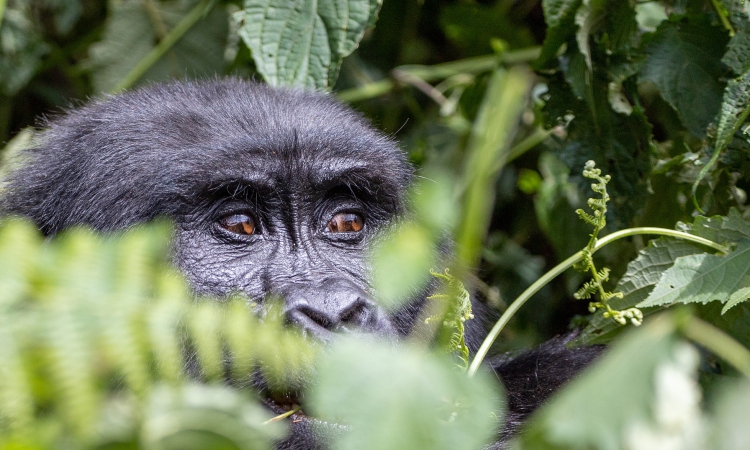

Volcanoes National Park is home to 10 habituated gorilla families open to tourism, part of a total mountain gorilla population of about 380 in the park. The wider Virunga mountain range, which extends into the Democratic Republic of Congo, is home to roughly 500 mountain gorillas in total.
Mountain gorillas live in family groups, each led by one dominant silverback.
On gorilla trekking tours, your family allocation is based on your preferences, fitness level, and accommodation.
Some gorilla groups live deep in the forest and require longer daily monitoring by park staff. Rwanda’s gorilla families are split into two categories: those open to tourism and those reserved for research.
The two research-only groups, Pablo and Beetsme, are among the largest gorilla families in the park.
Only eight visitors are permitted to observe each of the ten Rwanda gorilla families open for trekking per day, as set out in your gorilla trekking permit.

Below are the habituated gorilla groups and the best gorilla families to trek in Rwanda.
Susa Gorilla Group (Susa A Family)
The Susa group is one of the most popular gorilla families visited by tourists, studied for years by primatologist Dian Fossey. The name “Susa” comes from the nearby Susa River.
The group originally numbered 42 members but split in two after an internal conflict. Today, it consists of 28 members, including three silverbacks.
The Susa group lives high in the mountains, which makes tracking difficult and can take a full day.
Park rangers track the group’s general location, but tourist access is sometimes restricted on days when the gorillas range too far from the trailhead.
The Susa twins, Byishimo and Impano, are two of the most active members of the group. If you are fit and up for a longer trek, this family is worth considering.
Karisimbi Gorilla Group (Susa-B)
The Karisimbi gorilla group has 15 members and is typically found on the slopes of Mount Karisimbi.
This group split from Susa A after a prolonged conflict, which is why it is also known as Susa-B, or more commonly, Karisimbi.
Tracking this group is difficult, and gorilla trekking activities to this family can be canceled if they range too far on a given day.
Trackers travel ahead of visitors to confirm the group’s location and relay it to the guides leading the trek.
Visitors in good physical condition who can manage the long hike up Karisimbi’s slopes are rewarded with sweeping mountain views.
Sabyinyo Gorilla Group
Guhonda leads a family of about eight gorillas. At 220 kg, he is one of the largest silverbacks in the park.
The name Guhonda comes from Sabyinyo, the “Old Man’s Teeth” volcano around which the group lives.
Guhonda has kept the family together by keeping his rival, Ryango, out of the group.
The family includes several playful juveniles and stays close to the park’s edge, making it easy to spot and a good pairing with golden monkey trekking in Rwanda.
Amahoro Gorilla Group
The Amahoro family has 17 members, led by the dominant silverback Ubumwe.
“Amahoro” means “peaceful,” a quality Ubumwe has consistently shown while leading the group.
Despite losing several members to a rival silverback, Charles, who went on to form the Umubano group, Ubumwe has remained calm.
The Amahoro gorillas live on the slopes of Mount Bisoke.
The climb to reach them is steep, but visitors favor this group for its juveniles, predictable movement, and calm temperament.
Umubano Gorilla Group
The name “Umubano” translates to “good neighborliness.” This family split from the Amahoro group when Charles, a former Amahoro silverback, broke away to form his own family.
After a prolonged rivalry, Charles took several females from Amahoro to establish the new group.
Today, Umubano consists of 11 individuals, including six younger members, living near the Amahoro family.
This group is popular with visitors due to the shorter trek required to reach them and their distinct individual personalities.
Agashya Gorilla Group
This group was originally known as “Group 13,” led by Nyakarima until Agashya challenged him and took over the family after a serious fight.
This was the first documented family takeover recorded by gorilla researchers.
After moving away from Nyakarima’s territory, Agashya expanded the family by absorbing members from other groups and lone gorillas.
The group lives near the Sabyinyo family. When Agashya senses danger, he leads the group to a preferred safe area higher up the volcano, which makes the family harder to monitor consistently.
The group has grown from 13 to around 25 members under his leadership.
Kwitonda Gorilla Group
This group has 18 members, including two silverbacks, led by Kwitonda.
The family originated in the Congolese highlands before settling in Rwanda.
They live on the slopes of Mount Muhabura but range across a wide area, which makes tracking more difficult but often more rewarding.
Hirwa Gorilla Group
This is a relatively new family, formed when individuals from Group 13 and the Sabyinyo family broke away to form their own group.
The group is led by a highly protective silverback, making it a strong choice for travelers seeking a private gorilla trekking experience in Rwanda.
The name “Hirwa” means “lucky one,” since the group grew as additional gorillas voluntarily joined.
First observed in 2006, the group now has 16 members, including twins.
The family can be difficult to locate on certain days.
Bwenge Family Group
Bwenge, whose name means “wisdom,” leads this family of gorillas.
Some members of this group appeared in the film Gorillas in the Mist.
The group formed in 2007, when Bwenge left his birth family and was joined by females from other groups.
The family has 11 members, though reaching them is challenging, since they live on a steep, often muddy hillside on the slopes of Karisoke.
Ugenda Gorilla Family
Ugenda is a family of about 11 members, including two silverbacks, living near Mount Karisimbi.
The name comes from the Kinyarwanda word for “being on the move,” describing the group’s roaming habits.
Their nomadic lifestyle makes them harder to track on certain days than more settled families.
More Rwanda Gorilla Families
Beyond the most commonly trekked families, Volcanoes National Park is home to several additional habituated gorilla groups.
The Igisha family and the Kwisanga family are both habituated groups available for gorilla trekking in Rwanda. See the full Igisha gorilla family guide and Kwisanga gorilla family guide for group size, dominant silverback, and trekking details.
The Muhoza family and the Noheli family round out two more of the park’s trekkable groups. See the full Muhoza gorilla family guide and Noheli gorilla family guide for group size, dominant silverback, and trekking details.
The Pablo family and the Isimbi family complete the list of habituated gorilla groups in Volcanoes National Park. See the full Pablo gorilla family guide and Isimbi gorilla family guide for group size, dominant silverback, and trekking details.
Each of these Rwanda gorilla families offers a different trekking experience, from short, easy hikes to full-day treks through steep terrain.
Book your gorilla trekking permit and let a licensed tour operator match you with the family that fits your fitness level and interests.